

🐾 How Do I Stop My Cat Scratching the Sofa?

Updated: Mar 2

If your cat is scratching the sofa, you’re not alone. It’s one of the most common concerns for UK cat owners — and one of the most frustrating.
The good news? Scratching is a completely natural behaviour. The key isn’t stopping your cat from scratching — it’s redirecting them to a better surface.
Here’s how to do it properly.
🧠 Why Do Cats Scratch Furniture?
Cats scratch to:
Maintain healthy claws
Stretch muscles and tendons
Mark territory (they leave scent as well as visual marks)
Relieve stress or boredom
Sofas are particularly attractive because:
Fabric offers resistance
They’re positioned centrally in the home
They carry your scent
So your cat isn’t being naughty — they’re following instinct.
🚫 Why Spraying or Shouting Doesn’t Work
Punishment rarely solves the issue. It can:
Increase anxiety
Lead to scratching elsewhere
Damage trust
Instead, successful solutions focus on providing a better scratching option.
✅ Step 1: Provide the Right Scratch Surface
Many cats ignore small or flimsy scratch posts because they:
Wobble
Tip over
Are too short
Offer weak resistance
For effective redirection, your scratch furniture should be:
Stable and sturdy
Large enough for full stretching
Positioned near the sofa initially
Made from dense material
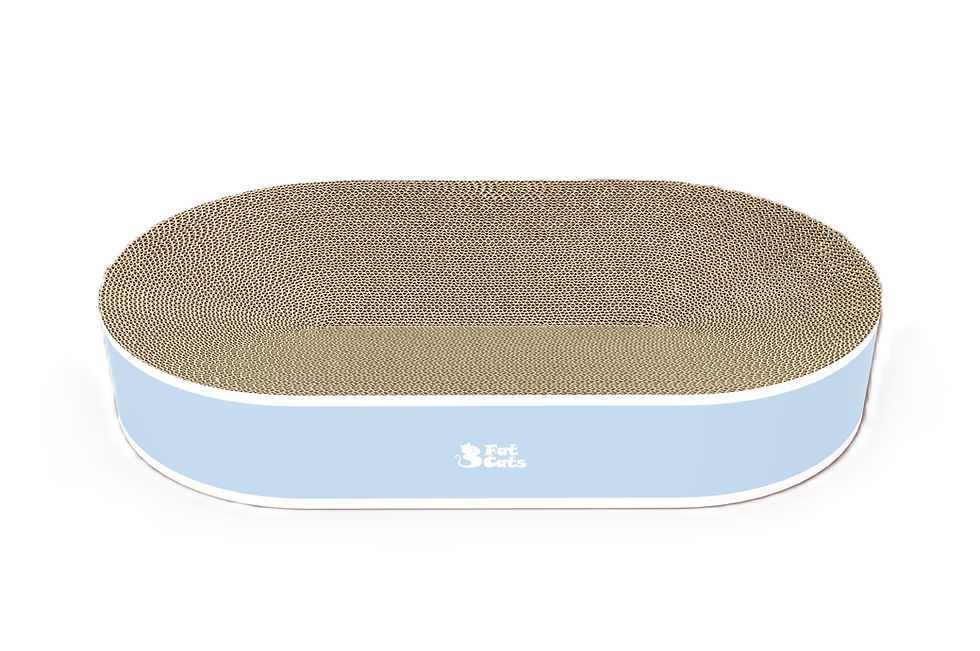
High-density corrugated cardboard often provides the ideal resistance that indoor cats prefer.
📏 Step 2: Make Sure It’s Large Enough
One of the biggest mistakes UK cat owners make is buying scratchers that are too small.
Larger breeds such as Maine Coons — or even average-sized adult cats — need space to:
Fully stretch
Shift position
Lounge comfortably
If your cat “spills over” small round beds, they’re unlikely to choose them over your sofa.
Generously sized scratch furniture dramatically increases usage.
📍 Step 3: Position It Strategically
Place the scratch furniture:
Near the area where your cat already scratches
In a central part of the home
Along walking routes
Near resting areas
Once they consistently use it, you can gradually move it to your preferred location.
🐾 Step 4: Encourage Use
You can:
Gently place their paws on the scratch surface
Reward with treats
Use catnip
Praise when they use it
Consistency matters.
🛋️ Step 5: Protect the Sofa Temporarily
While retraining:
Use sofa throws
Apply scratch guards
Trim claws (if appropriate and advised by a vet)
But remember — protection alone won’t solve the problem. Redirection is key.
🏡 Why Larger, High-Density Scratch Furniture Often Works Better
Cats prefer surfaces that feel substantial under their weight. High-density cardboard scratch furniture:
Provides satisfying resistance
Doesn’t wobble
Offers larger lounging areas
Protects sofas, carpets and walls
Many UK cat owners find that once a sturdy, generously sized scratch lounger is introduced, sofa scratching significantly reduces.
🐱 What If My Cat Still Ignores It?
If scratching continues:
Check placement
Try a vertical + horizontal option
Ensure it’s tall or wide enough
Consider multiple scratch areas in multi-cat homes
Different cats have different preferences — some prefer vertical scratchers, others prefer horizontal loungers.
🧡 Final Thoughts
You can’t stop a cat from scratching — and you shouldn’t try to. But you can give them a better, more satisfying alternative. When scratch furniture is:
Durable
Generously sized
Well positioned
Attractive enough to keep in the main living areas
It becomes a natural replacement for the sofa.
Frequently Asked Questions
What is the best scratch furniture to stop sofa scratching?
Sturdy, high-density scratch furniture large enough for full stretching tends to work best.
Do cardboard scratchers damage quickly?
Low-quality ones can. High-density corrugated designs last significantly longer.
Is vertical or horizontal scratching better?
Many cats benefit from access to both.
Not sure which scratch furniture is right for your cat? Download our Ultimate Premium Buyer’s Guide (UK Edition) to learn what really matters when choosing durable, generously sized scratch furniture. Download the Free Guide:




Comments